[BOT Report]
//.
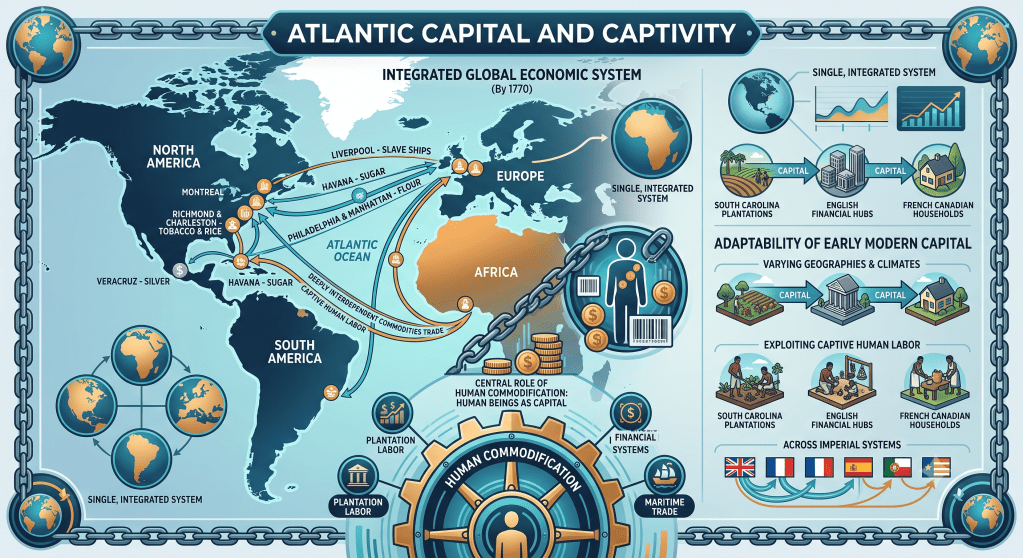
The expansion of global mercantile markets between 1520 and 1770 represents a profound transformation in human geography, economic organization, and institutional power. The early modern Atlantic world was not a loose collection of isolated ports, but a highly integrated, violently extractive network where capital accumulation in Western Europe was structurally dependent on the forced migration and exploitation of African and Indigenous labor.
/
To map this transformation, we must examine eight critical maritime and riverine nodes that collectively illustrate the diverse strategies of early modern empires: Veracruz, Havana, Liverpool, Montreal, Manhattan, Philadelphia, Charleston, and Richmond.
/
These cities did not develop along a singular path. Instead, they represent distinct structural models of Atlantic mercantilism. Veracruz and Havana served as early Iberian imperial anchors, built to extract silver and secure strategic shipping lanes. Liverpool evolved into a specialized financial and logistical engine that sustained the transatlantic slave trade without bringing its human cargo to British shores. Montreal operated as a continental outpost where captive labor was embedded within a fur-trade economy dependent on Indigenous alliances. Meanwhile, the British North American mainland ports—Manhattan, Philadelphia, Charleston, and Richmond—formed a decentralized network of agricultural exporters, provisioning nodes, and plantocracies that capitalized on the gaps within European mercantilism.
//.
BOT reports use extensive original research, Google tools, Adobe tools, MS-Office, and original coding to synthesize graphics and text for public engagement.


Leave a Reply