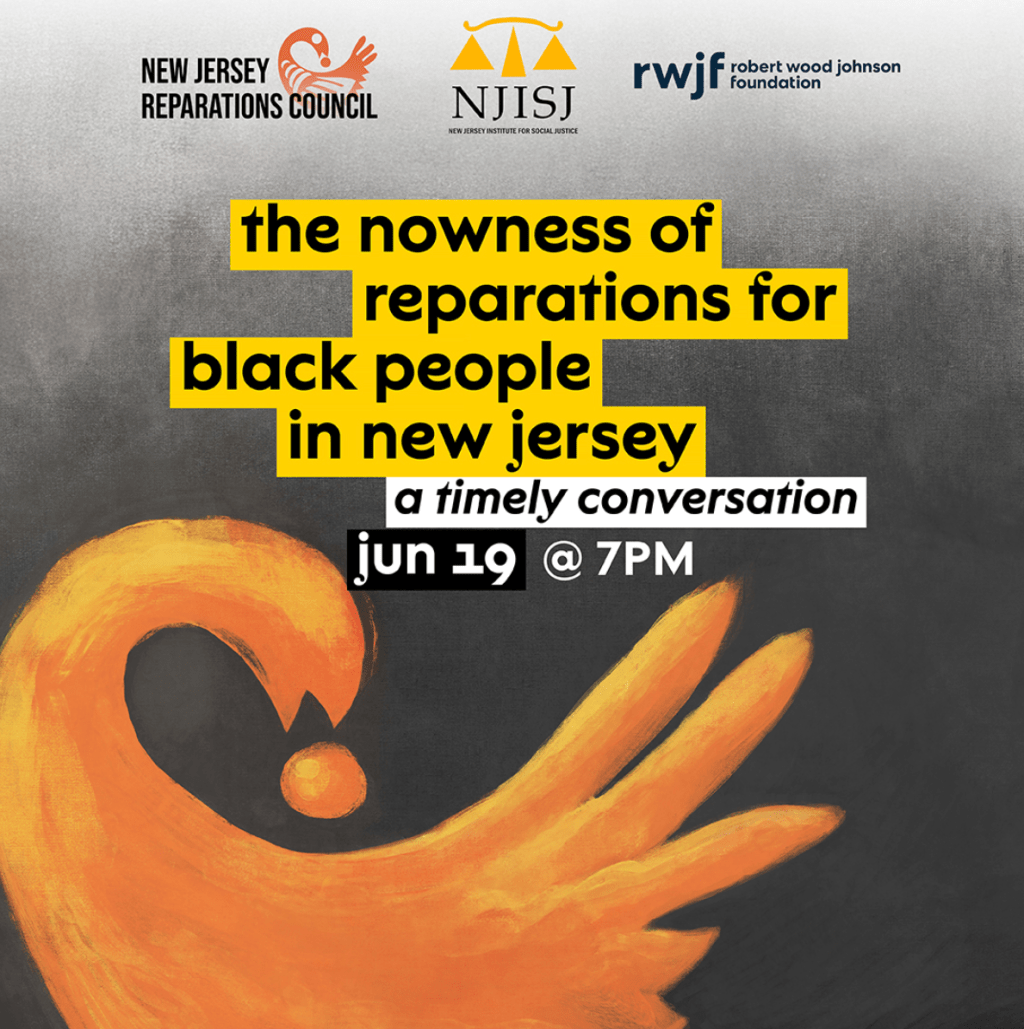

The following transcript was the basis for Distinguished Professor Walter D. Greason’s report on the work of the “History of Slavery”, “Faith and Black Resistance”, and “Economic Justice” committees for the New Jersey Reparations Council, a project of the New Jersey Institute for Social Justice.
Our colleagues in presenting the history of enslavement in New Jersey did a magnificent service to the state, the nation, and the world by revealing the insights from the social history of capitalism that expose enslavement as both a culture and an economy. By highlighting the role of enslaved Africans in commercial market formation, they have recognized a deeper understanding of the complex contradictions of these systems, especially in the seventeenth and eighteenth centuries.
In corresponding ways, the knowledge generated from the members of the committee on faith and Black resistance showcases the power of activism, art, and rhetoric to inspire people to reject the worst evils of human civilization. Their analysis of abolitionism, in particular, exposes the myth of gradual emancipation that obscured New Jersey’s legacy as the slave state of the North for three centuries.
These twin rows of pillars provide an essential architecture for the work of the economists and policy makers who crafted the agenda for economic justice. Our conversations debated how to create the most accurate understanding of the state’s economy through both slavery and segregation. The details of this historical analysis revealed the steadfast determination of the state’s wealthiest and most powerful leaders to subordinate Black Americans in every way possible before 1994. As a result, our policy conversations focused on the extent of the damage done, while carefully measuring the most effective ways to build a prosperous future for everyone in the state, but especially Black Americans and most recent immigrant families from the African continent and diaspora. Our consensus concern was the closing of the racial wealth gap. This emphasis moderated our models and allowed us to provide the most conservative, effective interventions. Even so, the ambition of this work is unparalleled in the state’s history. However, it is reflective of the unique position of New Jersey as an engine of creation in the world economy.
Black people in New Jersey have carried a massive burden as one of the most reliable consumer markets in the state, while also struggling against the legacy of enslavement, ongoing segregation in schools and neighborhoods, and persistent discrimination in education and employment. The clear portrait of our history — both the horror of enslavement and the glory of the Black Freedom Struggle — structures the economic justice plan to rebuild Black communities and institutions that will raise the quality of life for Black people, for all people, over the next century.
Professor Walter D. Greason works with the students and faculty at Macalester College in Saint Paul, Minnesota, to create research and activist initiatives to advance racial justice around the world. His books and articles have transformed educational curricula and public policy through Afrofuturist history.
The full report from the Reparations Council is available here.
 Genius Locus
Leave a comment